


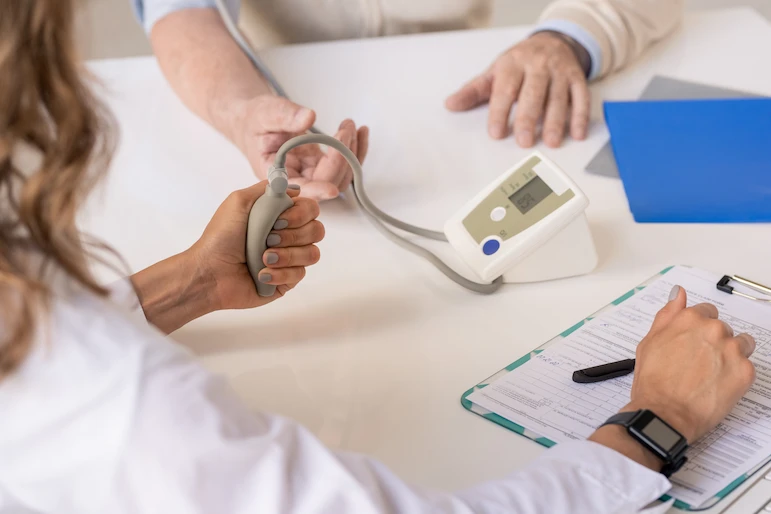
What is high blood pressure?
Blood pressure is a measure of how hard your blood pushes against the walls of the tubes that move blood through your body (arteries). Your blood pressure goes up and down throughout the day. But if your blood pressure stays up, you have high blood pressure, or hypertension.
When blood pressure is high, it can damage your blood vessels. Damage to your blood vessels can make it more likely for you to have heart disease, stroke and kidney problems.
How is blood pressure measured?
When you get your blood pressure measured you will hear two numbers:
- Systolic blood pressure (the first or top number) – is how much pressure your blood is pushing against your artery walls when your heart contracts (beats).
- Diastolic blood pressure (the second or bottom number) – is how much pressure your blood is pushing against your artery walls when your heart muscle is resting between beats.
What are healthy blood pressure ranges?
Healthy blood pressure is 120/80. Use the chart below from the American Heart Association to learn about what is considered high blood pressure:
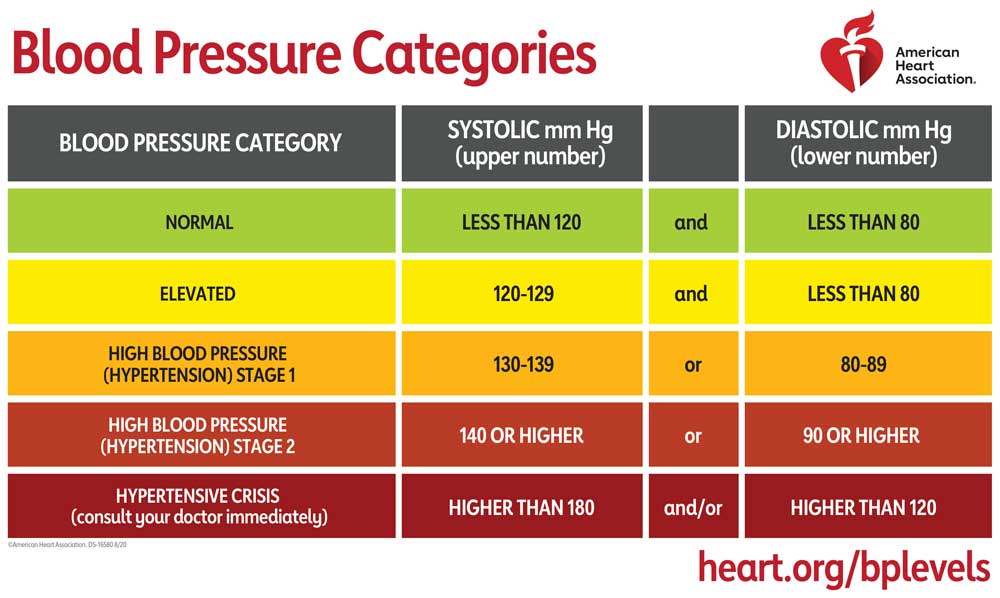
If you are measuring your own blood pressure and it is at or above 180/120, you are in hypertensive crisis. Wait five minutes and then test your blood pressure again. If your readings are still high, contact your doctor right away.
If your blood pressure is higher than 180/120 or you are feeling symptoms such as chest pain, shortness of breath, back pain, numbness or weakness, change in vision or problems speaking, call 911.
What are the effects of high blood pressure?
Over time, high blood pressure can damage your arteries. If left untreated, high blood pressure can lead to other options such as:
- Artery disease leading to body pain or fatigue (tiredness)
- Chest pain
- Heart attack or heart failure
- Stroke
- Kidney disease
- Vision loss
How is high blood pressure treated?
Lifestyle changes such as healthy diet and staying active can help control and manage high blood pressure. Your health care provider can help recommend some lifestyle changes such as:
- Eating a heart-healthy diet with less salt
- Getting or staying active
- Keeping a healthy weight or losing weight
- Limiting alcohol
- Not smoking
- Getting 7 to 9 hours of sleep every night
If lifestyle changes do you not help manage your blood pressure, your health care provider might recommend medicines.
Tools
Resources
- Alliance trainings
- Educational Videos
- Mayo Clinic
- American Heart Association
- Durham Network of Care
- Wake Network of Care
- Caregiver tips: